tiller
The tiller of Santiago's skiff is a deceptively simple object: a wooden lever fitted into the rudder, used to steer the boat. In the opening pages, as the old man prepares for his voyage, the tiller is merely part of the boat's equipment, unremarkable and functional. He steers with it under his arm, a casual gesture that speaks to a lifetime of familiarity. Yet this humble piece of wood will undergo a dramatic transformation, becoming a symbol of the old man's dwindling resources and his unyielding will to fight.
Steering and the Rhythm of the Voyage
Throughout the long struggle with the marlin, the tiller serves its primary purpose. Santiago, half-lying in the stern, steers with the tiller under his arm, navigating by the feel of the trade wind and the pull of the sail. He uses it to hold his course south-west, toward home, while his hands are busy with the line or soaked in the healing salt water. The tiller is the quiet, constant companion of his endurance, the tool that keeps him connected to his destination even as his body fails him. It is part of the routine of sailing, a routine that provides a fragile sense of normalcy amidst the extraordinary battle.
The Tiller as a Weapon
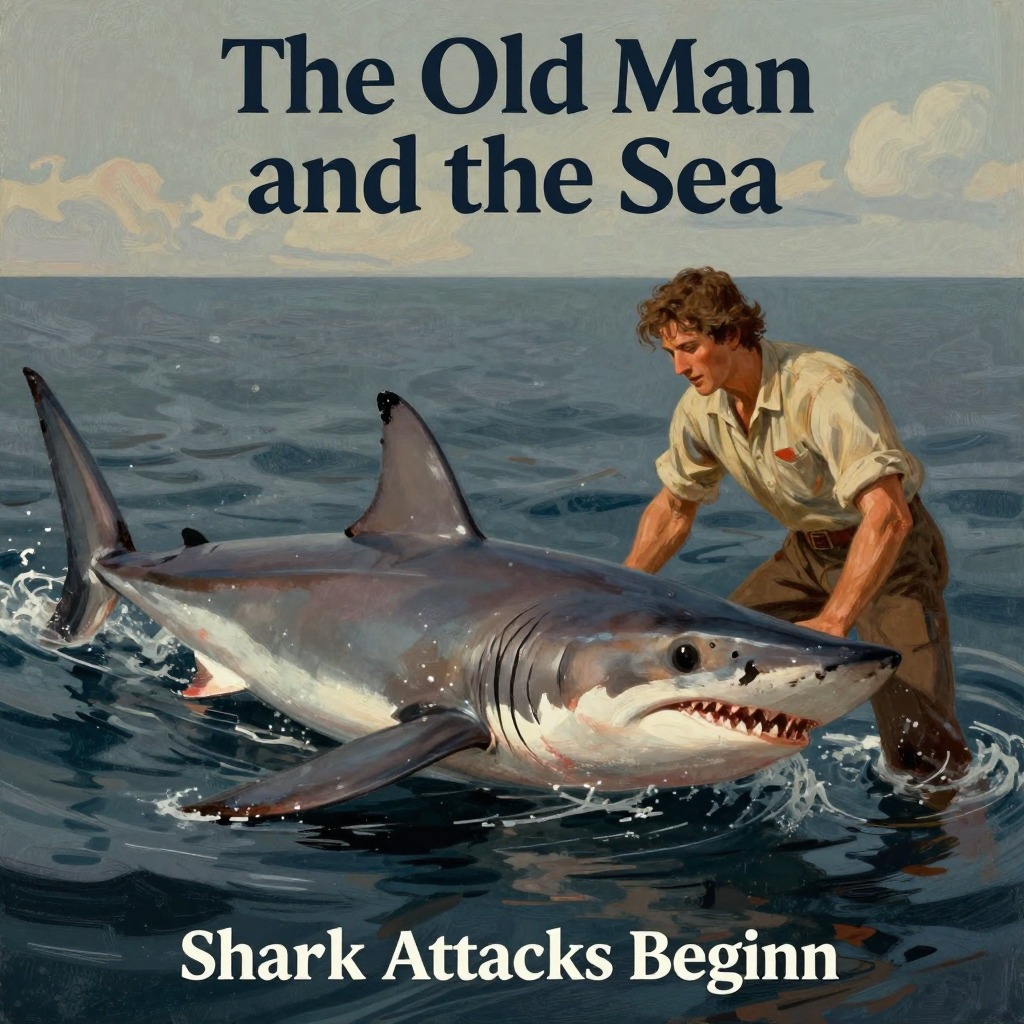
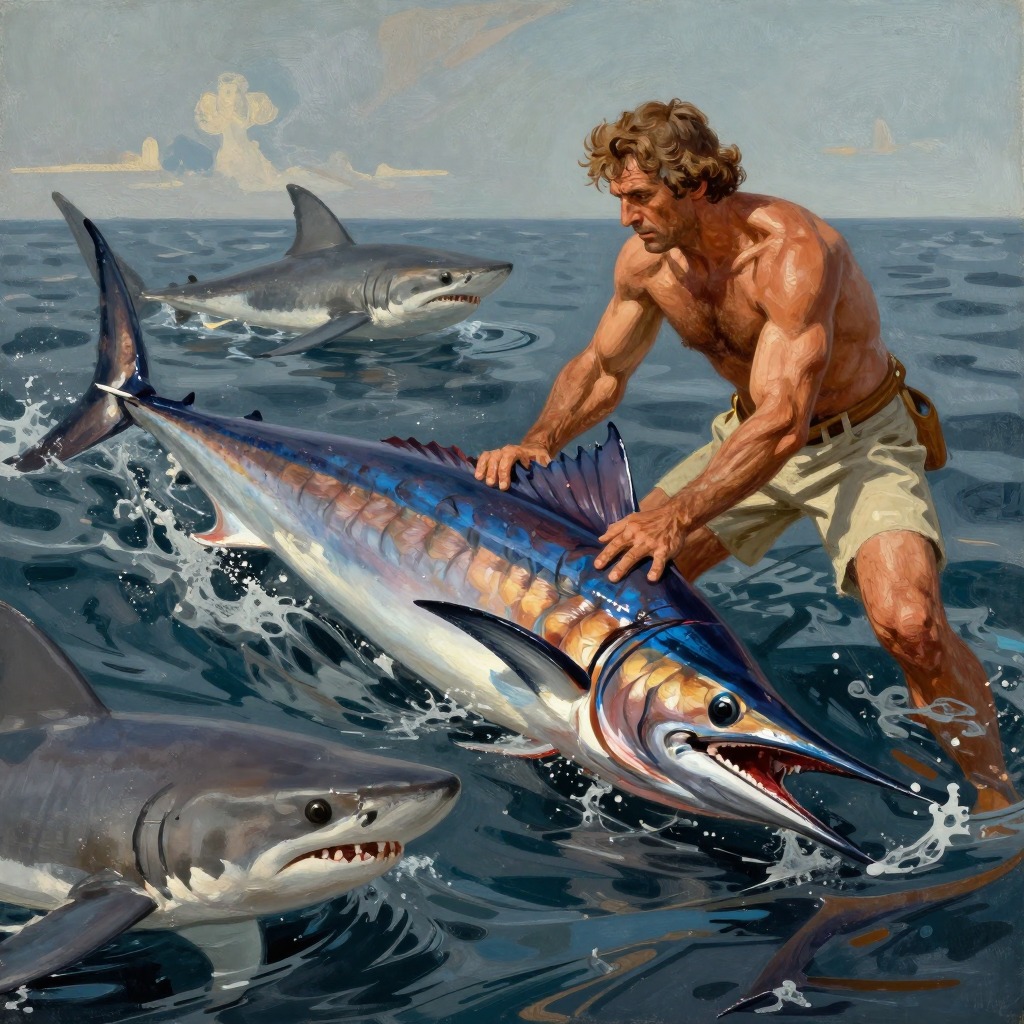
When the sharks begin their assault, the tiller's role changes irrevocably. After the Mako shark is killed with the harpoon, and after the first pair of shovel-nosed sharks (the galanos) are fought off with a knife lashed to an oar, Santiago's arsenal is depleted. The knife blade snaps during the attack of a single shovel-nose shark. Left with only the gaff, two oars, and the short club, he faces the next wave of predators. During the second attack by a pair of galanos, he uses the club, but it is eventually seized and torn from his hands by a shark. With his last effective weapon gone, Santiago is forced to improvise. He jerks the tiller free from the rudder and, holding it in both hands, beats and chops at the sharks with it, driving it down again and again. The tiller, once a symbol of controlled navigation, becomes a desperate, bludgeoning instrument of survival.
The Breaking Point
The final, decisive moment for the tiller comes during the midnight attack by a pack of sharks. Santiago, fighting in the dark, swings the tiller across the head of a shark whose jaws are caught in the heavy skull of the marlin. He swings it once, twice, and again. The tiller breaks. The sound of its snapping is the sound of Santiago's last line of defense giving way. He does not surrender, however. He lunges at the shark with the splintered butt of the tiller, driving the sharp, broken end into the creature. The shark lets go and rolls away, but the fight is effectively over. The tiller, now a jagged stump, has been used up, just as the old man himself has been used up.
Aftermath and Return
After the last shark has gone, Santiago returns to the stern. He finds that the jagged end of the broken tiller will still fit into the slot of the rudder well enough for him to steer. He settles the sack around his shoulders and puts the skiff on her course. The broken tiller, a physical manifestation of his defeat, is still just functional enough to bring him home. He notes that the skiff itself is sound and not harmed in any way except for the tiller, which he knows is easily replaced. This practical observation underscores the nature of his loss: the boat is intact, but the great fish, the prize of his epic struggle, has been reduced to a skeleton. The broken tiller, like the old man's ruined hands and his shattered pride, is a wound that can be mended, but the memory of the battle and the loss it represents cannot be erased.